
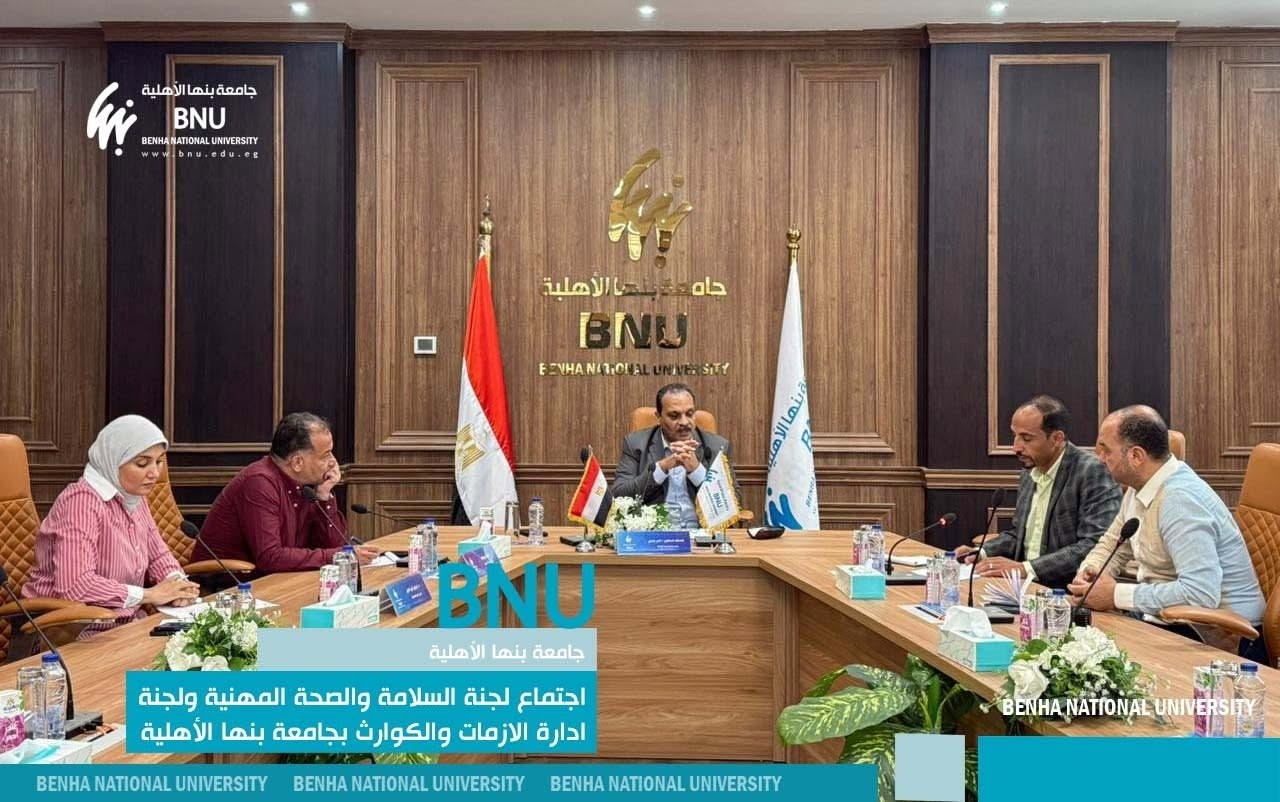
Benha National University convened a meeting of its Occupational Safety and Health, Crisis and Disaster Management, and Environmental Committee, chaired by Prof. Tamer Samir, President of the University, to review ongoing efforts to strengthen occupational safety practices and enhance preparedness for emergency situations.
The meeting was attended by Mr. Ayman Bayoumi, Secretary-General of the University, directors of the relevant administrative departments, and officials responsible for campus buildings, facilities, laboratories, and workshops.
Prof. Tamer Samir reaffirmed that the safety of students and staff remains Benha National University's highest priority, emphasizing the University's commitment to maintaining the highest standards of occupational safety and health while strengthening preventive measures and emergency preparedness to provide a safe and sustainable learning and working environment.
He noted that the University continues to promote a culture of safety and environmental awareness across the campus community through the continuous development of preventive procedures and preparedness measures. He also highlighted the importance of delivering specialized training in occupational safety and health, emergency and crisis management, disaster preparedness, and first aid to strengthen staff capabilities and improve emergency response.
The Committee reviewed a number of initiatives aimed at further enhancing the University's occupational safety framework, including preparations for an emergency evacuation drill, the formation of dedicated implementation teams, and measures to strengthen the Committee's organizational structure to improve coordination and emergency preparedness across the University.
The Committee also emphasized the importance of appointing Occupational Safety, Health, and Environmental Officers for the University's buildings, expanding awareness of evacuation procedures and emergency exits, and reinforcing laboratory safety through the provision of appropriate personal protective equipment, regular inspection of firefighting equipment, and strict adherence to the safe handling of chemical materials.
Members further reviewed preventive maintenance plans for campus buildings and infrastructure, assessed the readiness of fire detection, alarm, and firefighting systems, and examined waste management procedures and environmental compliance measures as part of the University's integrated approach to maintaining a safe and sustainable campus.
Prof. Tamer Samir emphasized the importance of ensuring the effective implementation and continuous follow-up of the Committee's decisions and recommendations, reaffirming the University's commitment to strengthening emergency preparedness while promoting the highest standards of safety across all University operations.