
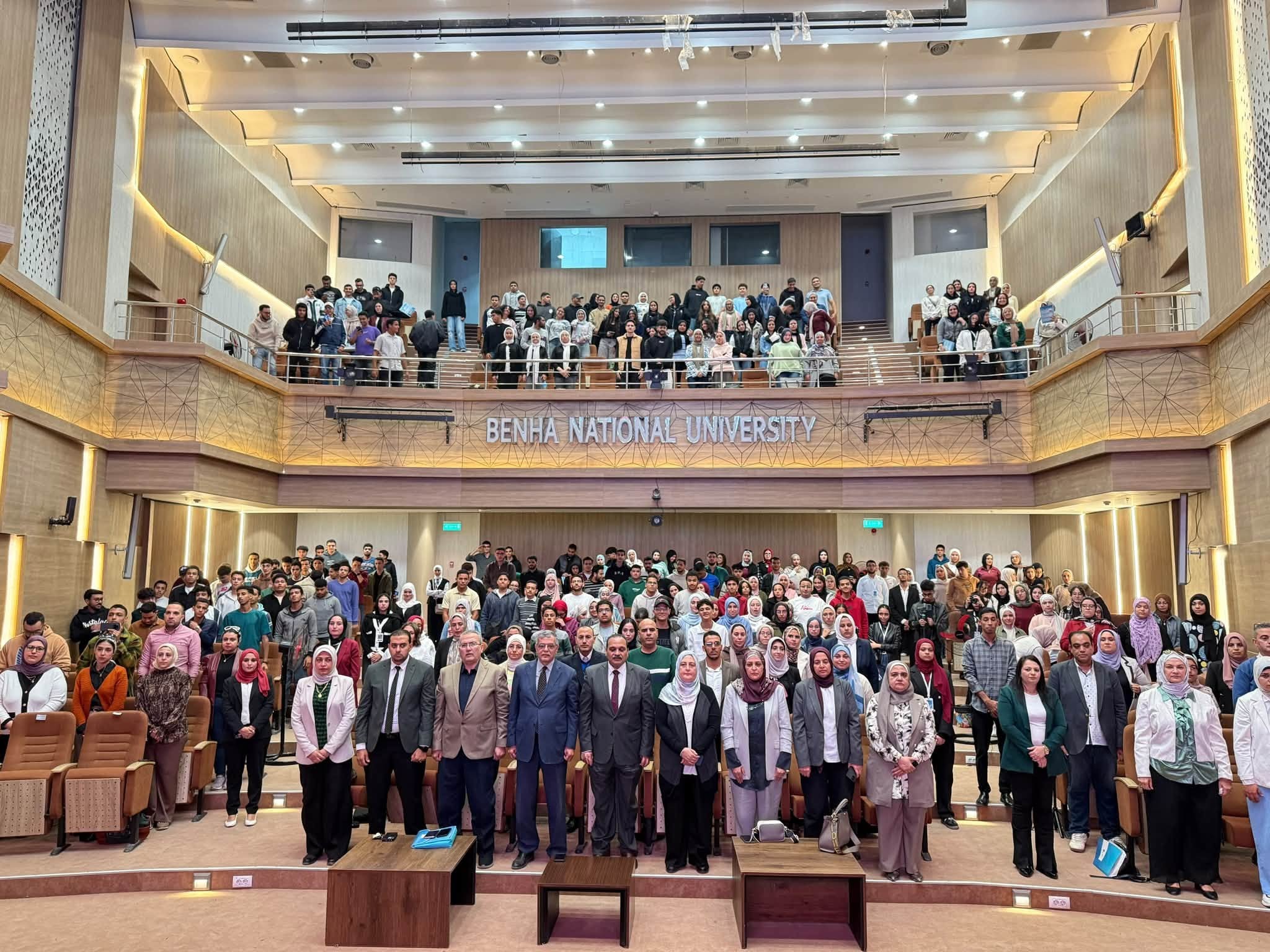
Benha National University organised an open, interactive event dedicated to academic advising under the theme “Academic Compass: A Step Towards Success”. The initiative reflects the University’s commitment to helping students navigate their academic pathways, understand academic regulations and study plans, make informed educational decisions, and plan effectively for their academic and professional futures.
The event was attended by Prof. Tamer Samir, President of Benha National University; Prof. Hussein El Maghraby, Vice President for Academic Affairs; programme directors; and a distinguished group of academic staff, academic advisers and students.
Prof. Tamer Samir reaffirmed the University’s commitment to raising awareness of the importance of academic advising and fostering a culture of continuous communication between students and their academic advisers. He emphasised that this relationship is a fundamental pillar of student support and a key contributor to academic excellence. He also explained that the University is working to establish an integrated communication programme linking students with the academic adviser in each faculty, ensuring regular follow-up, a better understanding of students’ needs, and the provision of appropriate guidance and support throughout their university journey.
Prof. Hussein El Maghraby, Vice President for Academic Affairs, outlined the concept of academic advising and its role in familiarising students with academic regulations and study plans. He stressed its importance in helping students select appropriate courses, monitor their academic progress, and address the challenges they may encounter, thereby improving academic performance and enhancing their prospects of success.
Dr Rasha Shaker, Director of the Academic Advising Unit, explained the key stages and mechanisms of communication between students and their academic advisers. These include understanding study plans and registration procedures, observing add-and-drop deadlines, monitoring academic performance and cumulative grade point averages, addressing academic difficulties, and directing students towards appropriate support services. She highlighted the importance of establishing regular communication with academic advisers from an early stage.
The event featured a range of interactive activities and engagement stations designed to familiarise students with academic advising services, clarify their responsibilities in monitoring their study plans, and highlight the importance of consulting their academic advisers whenever they encounter challenges or have questions about their university pathways.
The programme concluded with an open, interactive session on campus, bringing academic advisers and students together to address queries and discuss matters relating to academic pathways and study plans. The session encouraged direct communication and constructive dialogue, reinforcing academic advising as an active partnership between students and advisers and a fundamental pillar of a successful university experience.